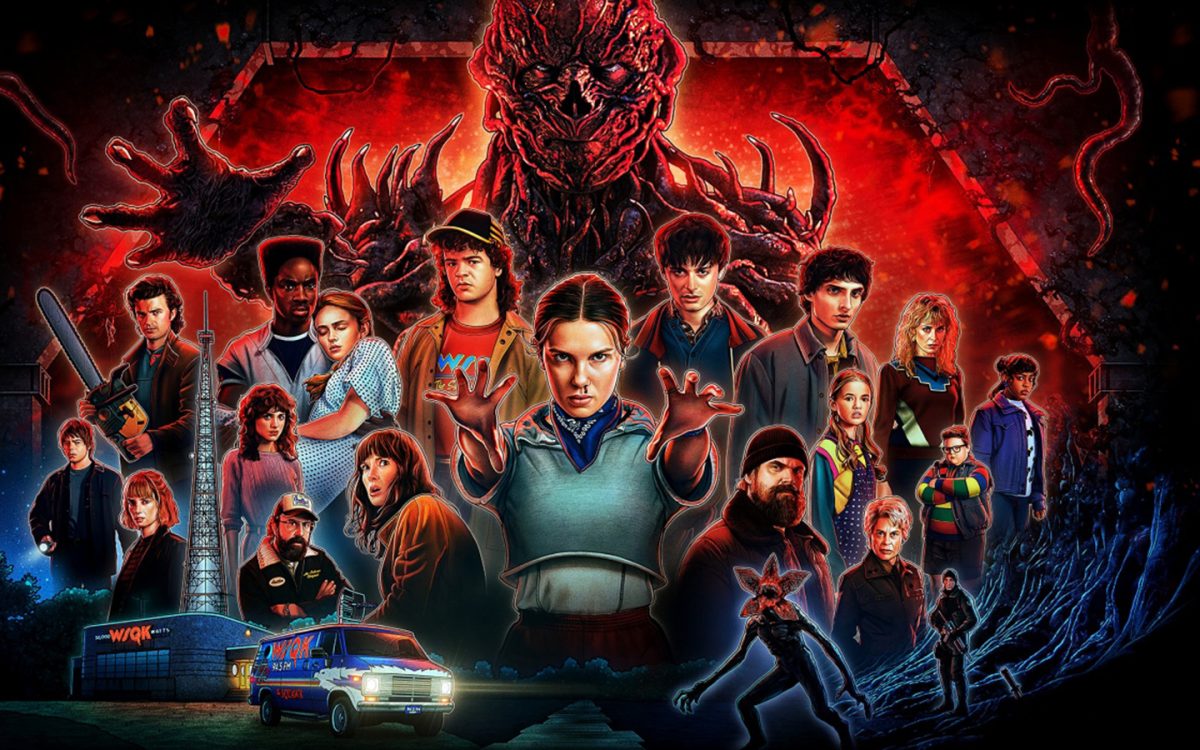
“Stranger Things”
Genre: Science Fiction, Horror, Drama
Rated: TV-MA
Released: December 31, 2025
Run Time: 2h 08m
Trigger Warnings: Violence, Gore, Horror Elements
Rating: 8.5/10
After almost a decade, the “Stranger Things” story has finally come to an end, closing off a chapter of pop culture and leaving fans torn between satisfaction and longing. The finale offers closure for every major character, yet it stops short of the narrative risks many expected, softening the weight of sacrifices that once shaped the series’ trajectory.
Viewers flooded social media with fan theories, critiques and emotional reactions just days after it was released. One of the most common takes was that the ending played things too safe, leaving some wishing the show had taken bolder risks in its final moments. Still, audiences felt the weight of the goodbyes, a feeling shaped by nearly 10 years of growing up alongside the kids of Hawkins.
The finale picks up with the military closing in on Hawkins as the crew prepares to enter the Upside Down and carry out their plan to end Vecna. The stakes quickly escalate through near-falls, hallucinations and close calls, creating a sense of uncertainty in viewers. As the group pushes deeper into Vecna’s territory, the soldiers continue hunting them, ultimately killing Kali, Eleven’s sister.
Despite the chaos, the kids eventually escape, defeat Vecna, and return to Hawkins. The emotional climax hits when Eleven sacrifices herself, leaving Mike and the others devastated.
Eighteen months later, Hawkins has returned to normal: the younger kids graduate, and the older ones move on with their lives.
A final game of D&D hints at the possibility that Eleven may still be alive somewhere far away.
The series closes on a touching, nostalgic note as Mike shuts the basement door, watching his younger sister and her friends take on their roles around the table.
This finale brought the audience through an emotional rollercoaster. Just like previous seasons did, it walked us through danger, loss, and sacrifice. Yet despite the intensity of these moments, the finale softened them with safe resolutions, modifying the themes that once defined the show’s highest stakes.
Fans were also expecting more irreversible consequences, especially given the massive buildup leading into the final episode.
What if Hopper really had shot Eleven in the tank?
What if the ending hadn’t left the possibility that she might still be alive?
Moments like these would have raised the stakes and pushed the story into more unpredictable territory. Instead, the show chose to protect its core cast, prioritizing emotional closure over narrative risk.
At the same time, “Stranger Things” built a world rich enough that fans imagined dozens of possible endings. Theories took the internet by storm, each one drawing from different plot points throughout earlier seasons. Even the producers noted, no one managed to guess the finale; not because the theories were off-base, but because the show took a quieter, softer path than many didn’t expect. That gap between anticipation and execution became a defining part of the audience’s reaction, and the lingering plot holes only added to the sense that certain parts were unresolved.
However, even with its narrative restraint, the emotional resonance of the story remained powerful. That’s why the ending of the show still worked despite its flaws. It didn’t have to be shocking to be meaningful. Fans grew up alongside the show, and that alone gave the finale weight. “Stranger Things” has always been about childhood, friendship, and the bittersweetness of growing older. The final D&D scene captured that perfectly, mirroring the first episode and creating emotional symmetry. We go from watching children play a game and searching for their missing friend to watching them play one last time before stepping into adulthood.
The performances also carried the finale. David Harbour, Gaten Matarazzo, Caleb McLaughlin—the monologues each character delivered and the weight behind their words landed with real force. Combined with the closure each character received and the sense of direction they’ve been given, these moments were enough to bring the audience to tears.
And the thing is, viewers weren’t just reacting to the finale itself. They were reacting to the years they spent with these characters. Viewers could feel the emotion as the older kids talked about their futures and how much had changed. It mirrored many personal experiences viewers have of growing up, realizing that things shift, people move forward and nothing stays the same.
The finale might not have been the bold, risk-taking conclusion many expected, but it was a heartfelt one, and that’s enough. The show stayed with many for nearly a decade, leaving behind a legacy and a lasting impact on its fans. Its ‘80s soundtrack, Eggo waffles and themes of friendship, growing up and confronting fear became more than just story elements; they became memories people will forever carry.
The show ends with uncertainty and change, but so does life—and that’s what “Stranger Things” captures best.
As Hopper said, “Nothing’s gonna go back to the way it was.”