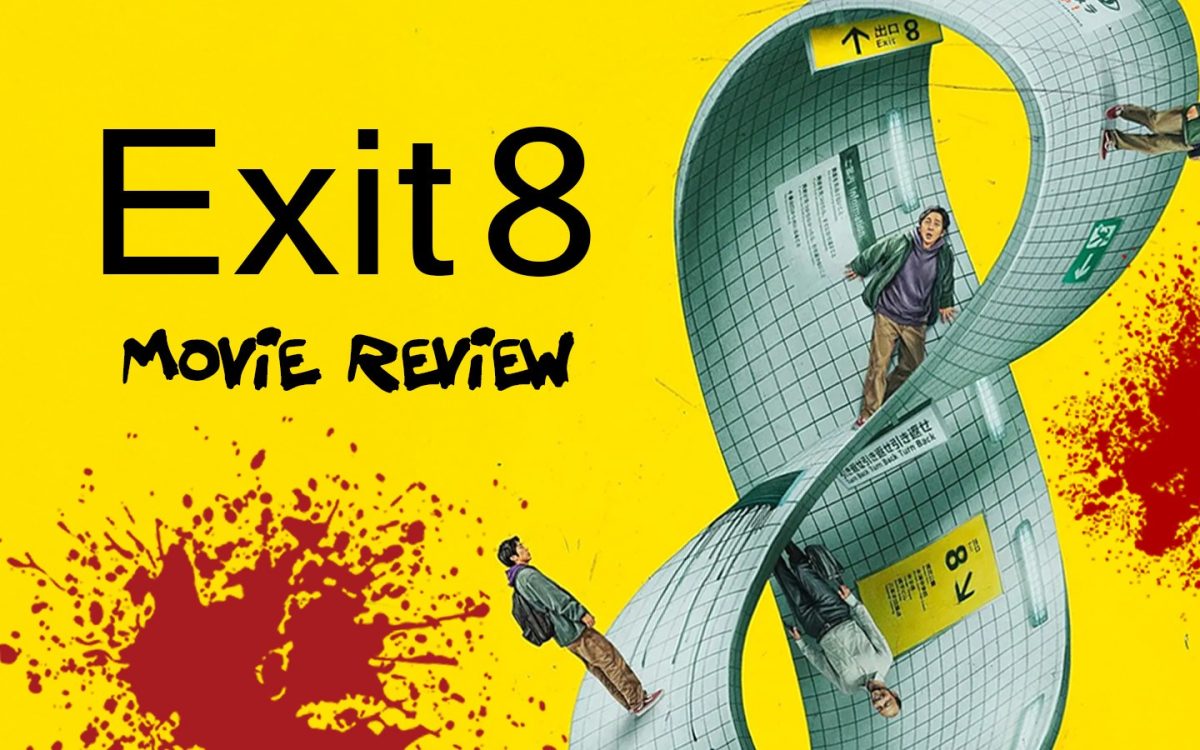
“Exit 8”
Genre: Japanese Horror
Rated: PG-13
Released: April 10, 2026
Run Time: 1h 35m
Trigger Warnings: Bloody images, terror
Rating: 7/10
A lot of horror films rely on jump scares or monsters. “Exit 8” does neither. Instead, it traps its protagonist and its audience in a looping subway station where nothing feels right and where an escape may not be possible at all.
The Japanese film, adapted from a video game and released in the United States on April 10, 2026, follows a man who becomes trapped in a looping subway station after receiving a life-changing phone call. As he moves through the halls, he must look for subtle anomalies and follow a set of rules in order to reach Exit 8 and escape.
Rather than relying on traditional horror aspects, “Exit 8” builds tension through subtle inconsistencies and repetition. The empty setting creates a liminal space that feels both familiar and unsettling, making the smallest changes feel alarming. However, the uneasiness the film creates doesn’t feel entirely physical. It begins to suggest something deeper than just a typical subway-set horror story.
Behind its minimal horror elements, “Exit 8” feels less like a story about escape and more like a reflection of the protagonist’s internal conflict. It’s about being trapped in a psychological loop caused by guilt and indecision, especially around the idea of becoming a parent.
From the beginning, the protagonist is faced with the dilemma of whether his ex should keep their child. As he moves through the subway station, the anomalies begin to reflect this conflict. Moments involving the sound of crying babies, unsettling imagery and even hallucinations of a future with his son suggest both the life he could have and the guilt of turning it away. Rather than feeling random, the anomalies he experiences feel tied to his inability to make a decision.
By the end of the film, the audience expects some form of resolution, possibly that he will accept responsibility and choose to keep the child. Instead, the story returns to the same scene it began with, leaving it unclear whether he has truly escaped or remains trapped in the loop. This lack of resolution gives the idea that his situation is not physical, but psychological.
The Walking Man is another character that appears burdened by unresolved emotions, particularly surrounding fatherhood. In one moment as he’s trying to escape the station, he reacts fearfully to a conversation about whether the subway could be a form of punishment for guilt. This suggests a deeper internal struggle. Later, he expresses regret over not being able to see his child, which adds on to the film’s repeating theme of remorse and responsibility.
Although “Exit 8” is presented as a horror film, it stands out for how deeply metaphorical it becomes. The looping subway reflects the feeling of being stuck in one’s own thoughts or decisions; the anomalies symbolize intrusive thoughts, doubt and guilt; the rules for reaching the final exit mirror the choice between confronting or avoiding problems; and the idea of an “exit” suggests that there should be a way out, even if one may not truly exist.
Adapting a film like this from a video game with little to no backstory is remarkable. However, “Exit 8” is not for everyone. Its repetitive structure and slow pacing may feel uninteresting to viewers expecting a traditional horror film. Still, for those willing to experience some sort of psychological discomfort, the film provides an eerie reflection on guilt, responsibility and the choices that can quietly change one’s life.