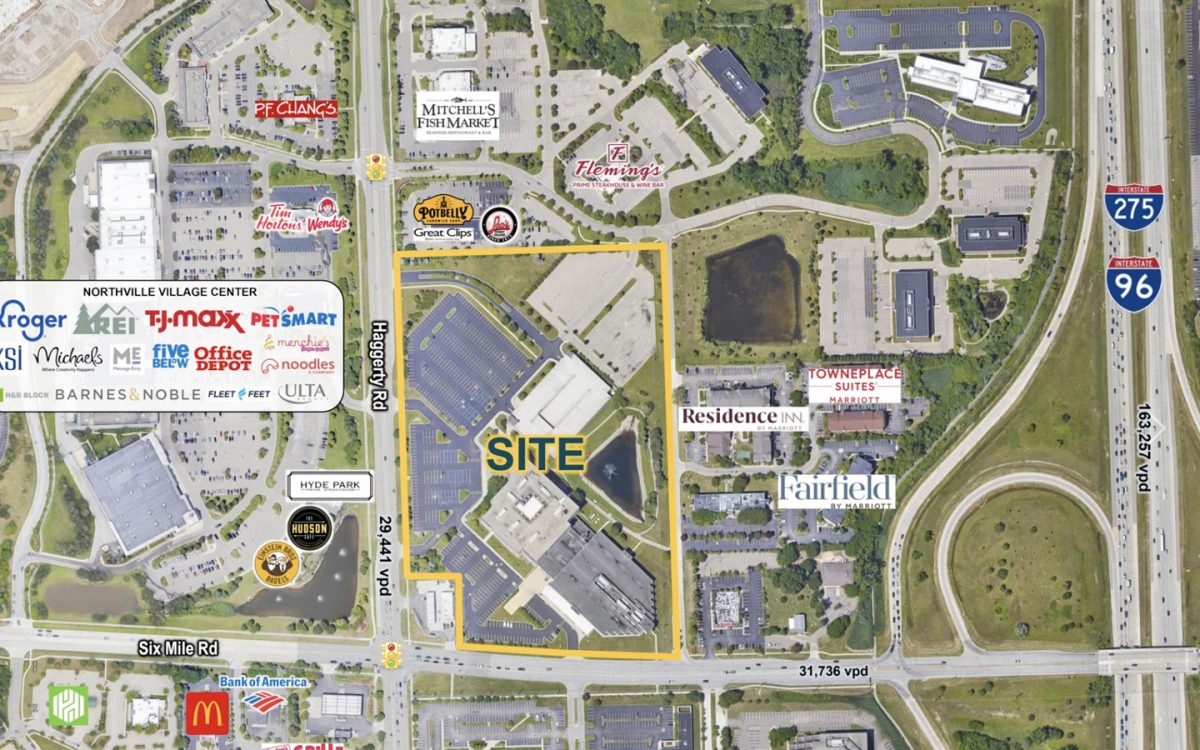
Driving to college on a weekday morning, commuters pass cars honking as they inch through traffic, metal clanging from the construction site and trucks beeping as they reverse. It’s the new soundtrack at Six Mile and Haggerty Road as work begins on a 25-acre mixed-use development that will bring retail, restaurants and a new apartment complex to the area.
Since the 1980s, Livonia has been largely built-out, leaving few chances for major new development. In 2023, a former Comerica Bank operations center at Six Mile and Haggerty was sold to Markus Management Group for $21.1 million, according to Crain’s Detroit Business. The sale opened the door for the City Council to transform the long-vacant property into a vibrant mixed-use district. The project aims
to modernize the area and bring new life to a part of the city that has seen little change
in recent years.

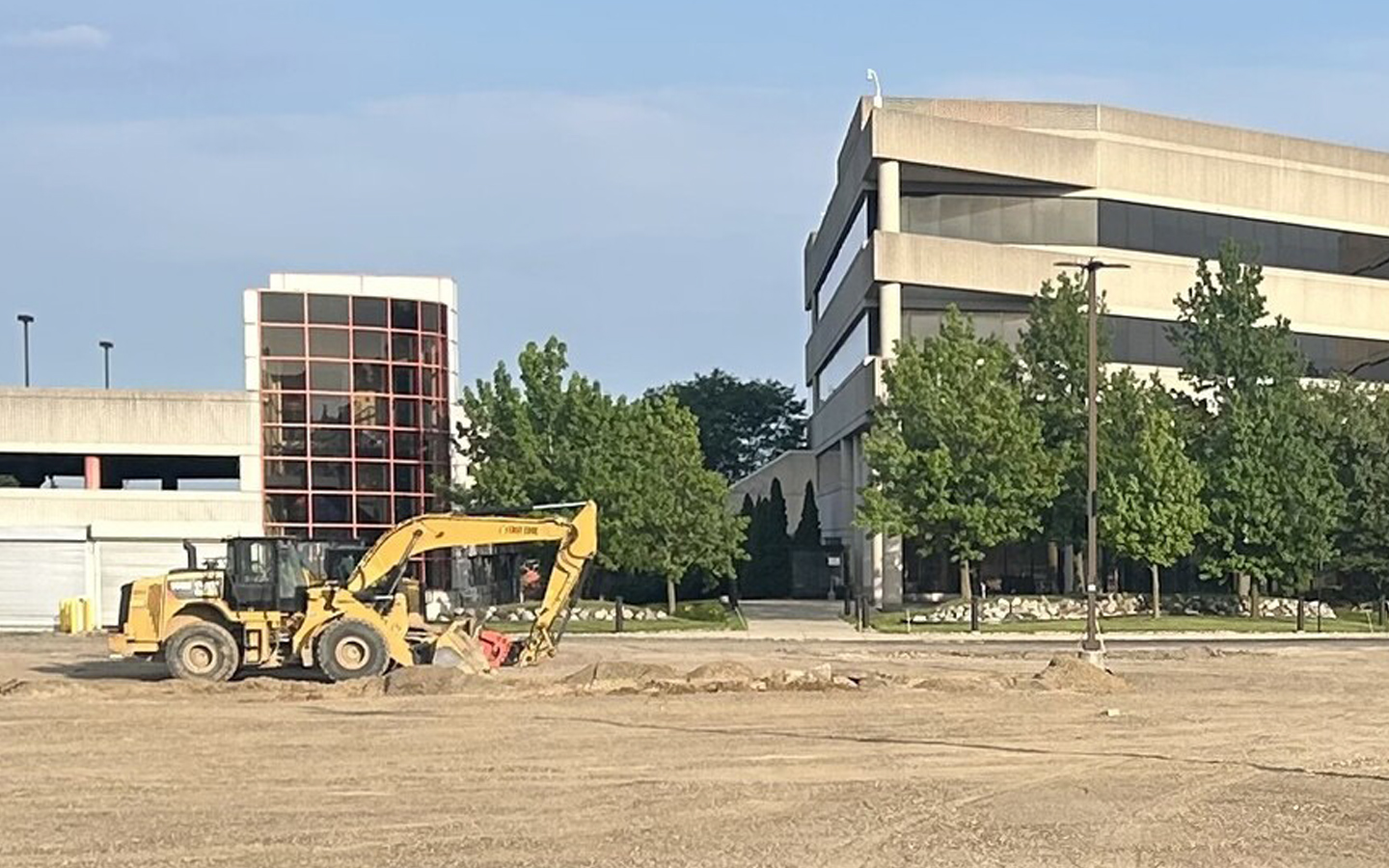
Demolition began in late summer of 2025 and is still underway. The first business expected to open is Whole Foods, which could open as early as April 2026, with the rest of the development rolling out later in the year. Plans include a Club Studio by LA Fitness, a Hyatt House hotel and several new restaurants such as Condado Tacos and Snooze A.M.
For Livonia City Council Member Brian McCullough, the project is more than a new development. It’s a chance to apply decades of construction and sustainability experience to a corner of Livonia that’s been declining for years.
With a background that includes Habitat for Humanity, a degree in Construction Engineering Technology and multiple Michigan Green Communities Challenge awards, he brings a technical perspective that shapes how the city approaches major projects.
His prior experience, he said, “helps be a good keeper of the Livonia decision making,” allowing him to advise on what will best serve residents and the community as a whole. McCullough has overseen major construction projects in the region, including work on Northville Township’s Essential Services Complex.
His technical expertise has shaped projects from recommending brick over cheaper materials to advising on façade upgrades and even placement of dumpster enclosures.
That knowledge becomes especially important as the city works through the project’s early hurdles, from contract agreements to traffic concerns. McCullough said many of the concerns including stormwater management, contract issues, building permits and safety standards were addressed before demolition to prevent problems for residents later on. When concerns do arise, such as traffic, he said
the city works to resolve them quickly and make sure residents have as much information as possible.
McCullough explained that the goal is not just to build something new, but to improve the quality of life for the people who live around it. Transforming a long-vacant corner into a productive, walkable district, he said, will enhance the look and feel of the area while boosting home values, increasing tax revenues, supporting local businesses and creating more job opportunities.
From the city’s perspective, McCullough said the redevelopment reflects a broader effort to modernize aging infrastructure and address long-standing maintenance needs. Livonia faces years of deferred work across its public spaces and facilities, and he sees this project as an early step toward tackling those challenges.
From a development standpoint, he believes the city can take a more innovative approach to how land is used, using projects like this one to introduce new services and rethink old spaces. In the months ahead, the noise of the demolition will fade, replaced by the steady rhythm of customers moving through new shops and restaurants. McCullough said his vision for the city is “to provide harmony to the surrounding area,” a goal he shares with the rest of the City Council as they work to shape a more innovative, intentional Livonia.
“You can really see how fast it’s changing,” said Taline Kharnoulian, a Livonia resident who drives past the corner every morning on her way to college. “Once it’s done, I’ll have more restaurant options and places to go to with my friends.”
What was once a corner marked by vacant, unused space is now emerging as a place where residents gather, shop and live, reshaping the daily soundtrack of Six Mile and Haggerty Road for years to come.