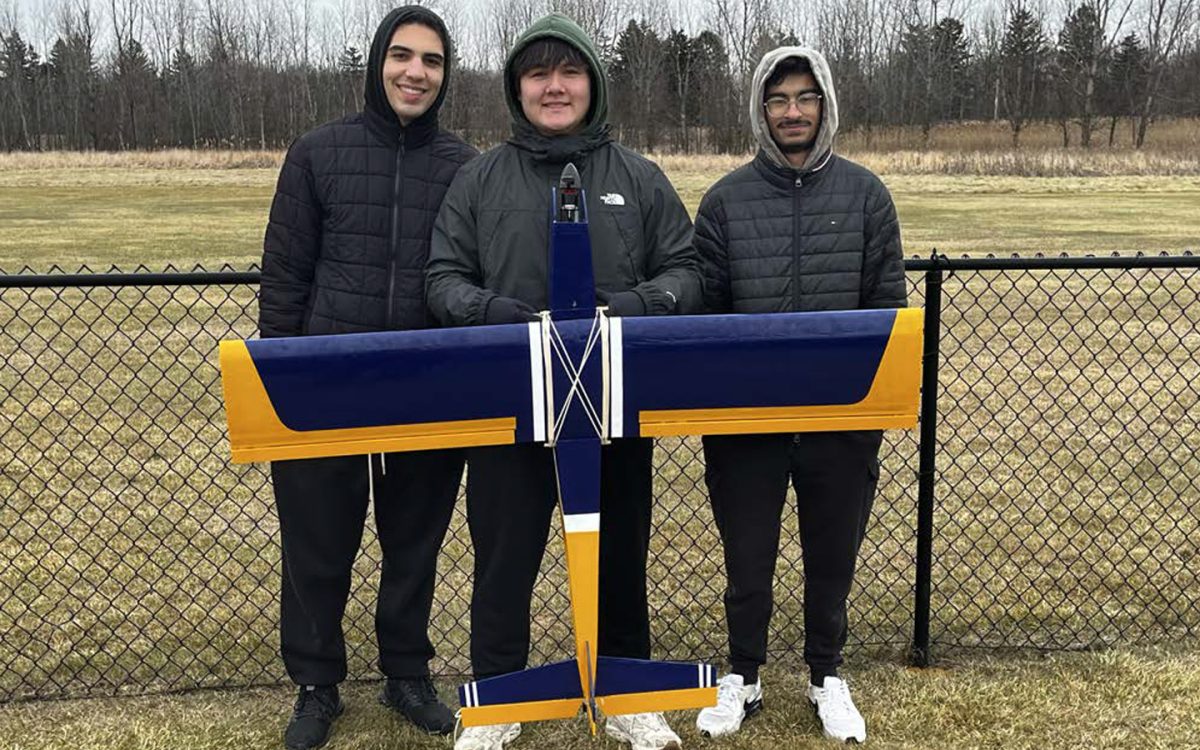
“Holy cow, how is that thing flying — we really did that,” said Tobi Lile, president of the A3 Engineering club, after the successful launch of the group’s student-built, 5-foot long, R/C (radio controlled) airplane. The flight marked the accomplishment of months of hard work, becoming the club’s most complex build to date.
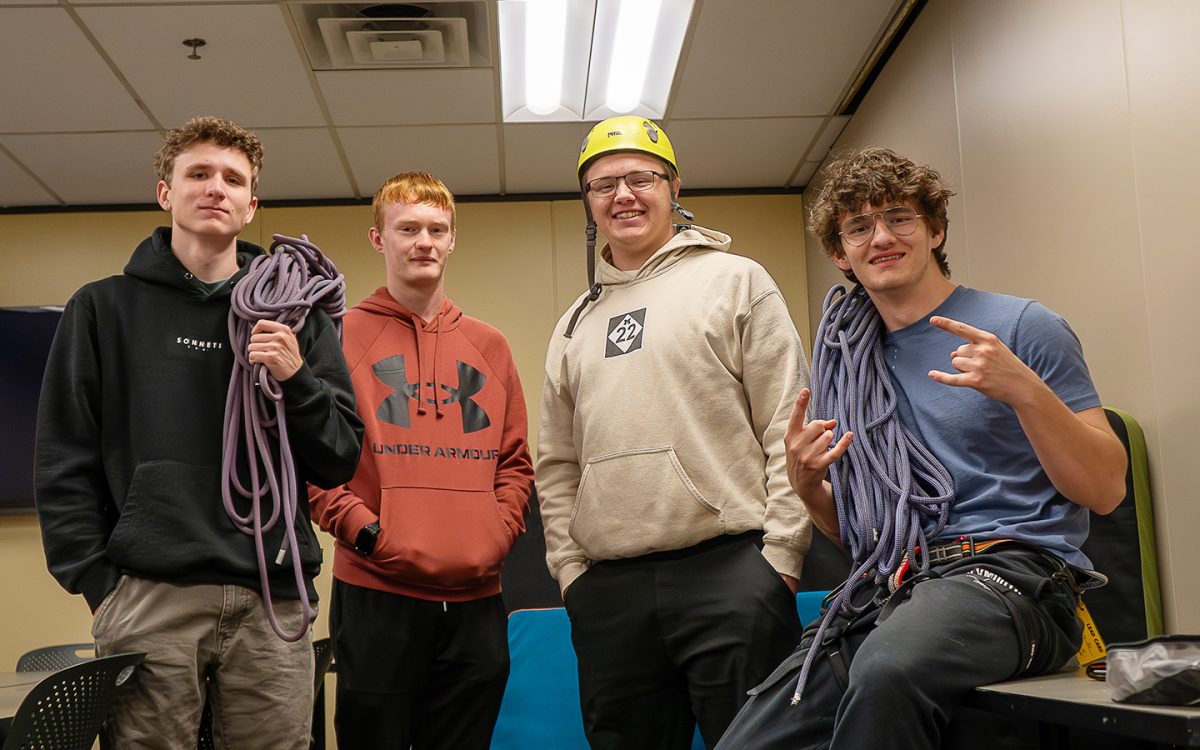
The A3 Engineering club (short for Aviation, Aerospace and Aeronautics Engineering), brings together students interested in aviation design and engineering. This year’s work introduced members to new challenges and deeper problem-solving, highlighting the club’s continuous growth in both skill and ambition.
Whether for future goals or mere enjoyment, the club gives members practical experience in building aircraft models from scratch. Being a part of this team shows students what the engineering field is like, teaching them the importance of starting from the beginning, making mistakes and advancing through hard work.
Lile first proposed the idea of building an R/C plane because he wanted the club to start strong and give members a meaningful opportunity for future engineering pursuits. Vice presidents Hanz Saleem and Faizan Khurran immediately supported the idea, and on Oct. 16, 2025, the team began drafting the initial plans for the project.
“We struggled along the way, but we overcame issues and we ended up with a finalized project,” Saleem said. Lile added that “facing failure and not having an equation to fall back on” was one of the most valuable parts of the engineering experience.
From there, the team began the long process of designing, cutting and assembling each part of the plane. Members worked on Computer-Aided Design software to modify components and adjust a 3D model of the plane. With guidance from R/C mentor Bob McDonald, the team leaders moved into the physical construction, using the necessary tools, machines, and blueprints to bring the aircraft to life.
“Our first week and a half into winter break, we spent about 50 hours building the plane at Bob’s house,” vice president Saleem said. With McDonald helping them through each step, the team spent hours measuring parts, calculating angles and testing fits as they tried to piece each component together.
The wing was the first component the team built, and it had to be the right weight and size for the plane to fly. Saleem explained taking measurements was the most difficult part of the process, and without McDonald’s experience and tools, the task would’ve been even harder. President Lile described the challenges as “chain reactions” — if the weight or measurement of one piece was off, it would throw off the next, ultimately affecting the plane’s ability to fly.
Away from the construction, vice president Khurran said that teamwork was its own challenge. After realizing that meeting once a week wasn’t enough to complete the project, he felt that “it was a lot more time-consuming than we initially thought.”
The team also disagreed on the plane’s colors and final design, a small but significant example of how every decision needed compromise before the finishing touches. Even with the long hours and constant adjusting, the leaders said it was draining at times but worth it in the end.
On the morning of Jan. 10, 2026, the plane was tested and successfully launched at the Signal Seekers R/C Club field. Saleem said he “felt complete,” as it was a major accomplishment to see the plane in the air. Khurran was excited to finally fly it, while Lile was impressed with how perfectly it performed and even got a video of it upside down and flying.
For the club’s leaders, the project was as much about guiding a team as it was about building a plane. The president said, “You really have to forget your opinions for a second…understand where they’re coming from, and from there you can meet in the middle.” They gave members as many opportunities as possible to contribute to the design and structure, even when limited space meant not everyone could work on the build at the same time.
Beyond teamwork, each member took away something different from the project. Vice president Hanz Saleem, who didn’t have much prior leadership experience, said the project helped him understand how to lead moving forward. Faizan Khurran added that learning to talk to people and take initiative is just as important as the technical work. President Tobi Lile highlighted the shift in his point of view of ownership that comes with leading a group, saying, “there’s no I in team.”
Each leader also had their own piece of advice to share with future builders and club members. Saleem emphasized using struggles and setbacks as opportunities to persevere and problem-solve, while Khurran reiterated his mentor’s advice by encouraging students to help and learn from one another. Lile simply advised students to work hard and stay curious.
With the project complete, the club leaders are already discussing what comes next.
There has been talk of building a rocket or a drone, though the next project is still undecided. As they prepare to transfer out of Schoolcraft, they hope more students will step into leadership roles and continue to offer hands-on approaches to engineering.
What began as a single plane has opened doors, from internship opportunities to the chance to present their work to the president and board of directors of Boeing, and created a path for future students to build, lead and discover opportunities of their own.
For more information on joining the club, contact the Student Activities Office at 734-462-4422.